
Choosing a 3M™ N95 respirator is about more than choosing a familiar model number.
The right respirator must:
- Match the specific airborne hazard and application
- Form a proper seal on the wearer
- Remain comfortable and practical throughout the task
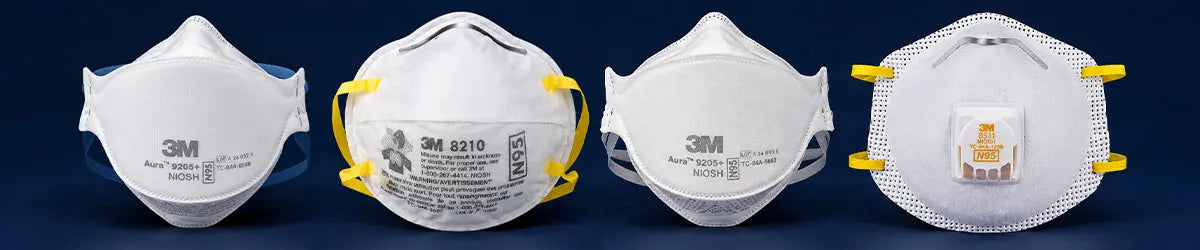
We're comparing four popular 3M™ N95 respirators: the 8210, 8511, Aura™ 9205+ and Aura™ 9210+. Here's what really sets them apart: shape, exhalation valve, strap construction and how well they work with prescription glasses, safety glasses and other protective eyewear.
All four are NIOSH-approved N95 filtering facepiece respirators for certain non-oil airborne particles. N95 means at least 95% filtration efficiency under NIOSH test conditions—not a guarantee of protection without proper selection and fit. Each model also carries a specific NIOSH approval number, shown below.
3M™ N95 Respirator Comparison at a Glance
| Model | Design | Valve | Straps | NIOSH Approval | Key Distinction |
|---|---|---|---|---|---|
| 3M™ 8210 | Cup style | No | Welded elastic headbands | TC-84A-0007 | Traditional molded shape; nose foam |
| 3M™ 8511 | Cup style | Yes | Braided headbands | TC-84A-1299 | Cool Flow™ exhalation valve; M-noseclip |
| 3M™ Aura™ 9205+ | Three-panel flat fold | No | Polyisoprene headbands | TC-84A-8590 | Low-profile top panel |
| 3M™ Aura™ 9210+ | Three-panel flat fold | No | Braided polyisoprene headbands | TC-84A-5668 | Braided straps designed to minimize hair pulling |
About NIOSH approval numbers: Each TC-84A number identifies a NIOSH-approved respirator model and can be checked against the NIOSH Certified Equipment List.
Cup Style vs. Flat Fold: What Changes on the Job?
Cup-style respirators arrive in a formed shape. For wearers accustomed to a molded mask, the 8210 and 8511 offer a familiar approach to disposable respiratory protection. Their shape does not fold flat for storage, and their fit still depends on the individual wearer.
Aura™ flat-fold respirators open into a three-panel design that flexes with facial movement. The sculpted, embossed upper panel provides more room for eyewear and is designed to help reduce fogging. That makes the Aura models especially worth evaluating where wearers routinely wear prescription glasses, safety glasses, or other protective eyewear. It does not mean every pair of glasses will fit comfortably or that fogging will disappear.
Four Models, Four Practical Buying Considerations
3M™ 8210: The Traditional Unvalved Cup
The 3M 8210 N95 respirator uses an adjustable noseclip, nose foam and welded headband attachments. It is a sensible starting point for buyers who want a conventional, unvalved disposable respirator and whose workers have successfully passed fit testing with this model. Its simpler construction should not be mistaken for universal fit.
3M™ 8511: A Valved Cup for Demanding Work
The 3M 8511 N95 respirator adds a 3M™ Cool Flow™ Valve that helps release warm, moist exhaled breath. For physically demanding work or longer periods of required wear, this feature can make the inside of the respirator feel less hot and humid. Its braided straps and adjustable M-noseclip also distinguish it from the 8210.
The 8511's valve helps release warm, moist breath, but there's an important trade-off: exhaled air passes through the valve. If your workplace has restrictions on exhalation valves, check before choosing this model. A valve also does not expand N95 protection to oil aerosols, gases or vapors.
3M™ Aura™ 9205+: Flat-Fold Convenience and Eyewear Clearance
The 3M Aura 9205+ N95 respirator combines a three-panel design, soft inner material and an adjustable noseclip. Its low-profile upper panel is particularly relevant when prescription or safety glasses sit close to the bridge of the nose. Buyers should evaluate whether eyewear remains properly positioned without disturbing the respirator seal.
3M™ Aura™ 9210+: The Braided-Strap Alternative
The 3M Aura 9210+ N95 respirator shares the Aura three-panel design and eyewear-friendly features. The difference is noticeable when putting the respirators on and taking them off. The 9205+ uses polyisoprene headbands, while the 9210+ uses braided polyisoprene headbands designed to help minimize hair pulling. Workers may prefer one strap style over the other, but each model requires its own fit evaluation.
Safety Manager Reminder: When respirator use is required, switching to a different tight-fitting respirator model requires a new fit test before use. A successful fit test with the 3M™ 8210 does not establish an acceptable fit with the 3M™ Aura™ 9205+ or another model. Comfort preferences do not replace OSHA fit-testing requirements under 29 CFR 1910.134.
Wearability Matters—After the Respirator Matches the Task
A respirator that feels comfortable during initial fitting may feel different several hours into a shift. Add heat, bending, talking, and prescription or safety glasses, and small comfort issues can become daily distractions. Evaluate wearability under realistic working conditions, without compromising the seal. Ask workers and safety teams to consider:
- Whether straps stay correctly positioned during movement
- Pressure or discomfort around the nose and head
- Interference with prescription glasses, safety glasses, and other required PPE
- Heat and moisture buildup during the task
- Whether workers can consistently follow proper donning and seal-check procedures
Do not select a model solely because it feels cooler, sits lower on the face or costs less. Comfort supports consistent use only when the respirator is suitable for the exposure and fits correctly. Replace disposable respirators according to manufacturer instructions and your workplace program; no model has a universal safe number of hours of wear.
Fit Testing, NIOSH Approval and OSHA Requirements
In US workplaces where tight-fitting respirators are required, OSHA's 29 CFR 1910.134 respiratory protection standard calls for a compliant program, including medical evaluation, fit testing before initial use and at least annually, training and appropriate use procedures. A user seal check is needed each time a tight-fitting respirator is put on; it is not a replacement for fit testing. Explore respirator fit test kits when planning your program.
These N95 models are not intended for oxygen-deficient atmospheres or protection against gases, vapors or oil-based aerosols. Facial hair or eyewear that interferes with the seal can compromise protection. Confirm the exposure assessment and product instructions before purchasing.
Verifying Genuine 3M™ N95 Respirators
When purchasing 3M N95 masks and respirators, confirm the exact model and NIOSH approval information against the manufacturer's documentation and the NIOSH Certified Equipment List. Review product packaging and markings for inconsistencies, and shop genuine 3M™ N95 respirators with confidence at Enviro Safety Products. A printed approval number alone does not establish that a respirator is genuine.
Compare and Shop 3M™ N95 Respirators
Whether comparing the 3M 8210 and 8511 cup-style masks or choosing between the Aura 9205+ and 9210+ flat-fold respirators, start with the hazard, confirm fit, then evaluate the design and comfort features that support correct use throughout the task.
Shop these four models in our 3M Disposable Respirators collection, compare additional options in our N95 Respirator Masks collection, or explore our complete Respiratory Protection collection for other workplace respiratory protection needs.